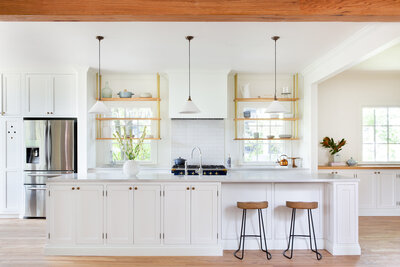

How Much Does Full-Service Interior Design Cost?
If you are considering hiring an interior designer, understanding the potential investment can help you plan your project with greater confidence.
For residential projects, full-service interior design fees can range from about $3,000 for a smaller, limited-scope room to $75,000 or more for a whole-property project. High-end, highly customized projects can exceed $100,000 in design fees.
However, the designer’s fee is only one part of the budget. Furniture, materials, custom pieces, construction, procurement, and installation can add substantially to the overall project investment.
Knowing how these costs are calculated and what services they cover can help you establish a realistic budget before starting your project.

What Is Full-Service Interior Design?
Full-service interior design is a comprehensive approach where an interior designer manages multiple stages of a project rather than providing a single design consultation.
Depending on the project, services may include:
- Space planning and layout development
- Interior design concepts
- Furniture and decor selection
- Custom furniture design
- Material and finish selections
- Lighting specifications
- Window treatments
- Art and accessories
- Product sourcing and procurement
- Contractor coordination
- Installation management
- Final styling
This approach is particularly useful for homeowners who want one professional to oversee the design process from concept through completion.
How Much Does Full-Service Interior Design Cost?
There is no standard price because every project has different requirements. As a general planning guide, residential full-service interior design fees may fall within these ranges:
| Project Scope | Approximate Design Fee |
| One room | $3,000–$8,000+ |
| Two to three rooms | $8,000–$20,000+ |
| Several rooms | $15,000–$35,000+ |
| Whole-property design | $25,000–$75,000+ |
| High-end custom project | $75,000–$150,000+ |
These figures are design-service estimates, not the complete cost of furnishing or renovating the property.
A whole-property project involving custom cabinetry, premium furnishings, architectural changes, and extensive project management can have a considerably higher overall budget.
What Does the Interior Design Fee Cover?
The answer depends on the designer’s contract, but a full-service fee can cover several stages of the project.
1. Design Planning
The designer begins by understanding your goals, lifestyle, functional requirements, aesthetic preferences, and budget. This information helps establish the overall design direction and determine the priorities for each space.
2. Space Planning
Space planning focuses on creating functional layouts that make the best use of the available area. The designer considers furniture placement, circulation, proportions, storage, and how different spaces connect with one another.
Note: Want modern kitchen design services in Austin? Transform your kitchen with smart storage, elegant materials, and functional spaces designed for everyday comfort and beauty.
3. Design Development
The initial concept is developed into a more detailed design through furniture, materials, finishes, colors, lighting, textures, and other elements. Depending on the project, this stage may also include drawings, mood boards, elevations, or design presentations.
4. Furniture and Material Selection
The designer researches and recommends furniture, lighting, fabrics, flooring, tile, finishes, and other products that suit the design direction. Selections are typically considered based on dimensions, quality, function, availability, and the established project budget.

5. Custom Design
Projects that require a more personalized approach may include custom furniture, cabinetry, built-ins, millwork, window treatments, or other made-to-order elements. Custom design can increase the overall project cost and may involve separate design, production, and installation charges.
6. Procurement
Depending on the agreement, the designer may manage the purchasing process after selections are approved. This can include placing orders, tracking shipments, coordinating deliveries, receiving products, inspecting items, and addressing issues with vendors. Procurement fees or product markups may apply separately.
Tip: If you are planning to upgrade your home interiors in Austin, Housemill Design provides personalized design solutions that perfectly balance style, functionality, and comfort for every homeowner.
7. Installation and Styling
The final stage may involve coordinating deliveries, placing furniture, installing window treatments, arranging artwork and accessories, and completing the overall styling. Installation and related services may be included in the design package or billed separately, depending on the designer’s pricing structure.
What Is the Difference Between the Design Fee and the Total Project Cost?
This is one of the most important things to understand when budgeting for full-service interior design.
Suppose your designer’s fee is $25,000. That does not necessarily mean you will spend only $25,000 on the entire project.
You may also need a separate budget for:
- Furniture
- Lighting
- Rugs
- Window treatments
- Artwork
- Accessories
- Flooring
- Tile
- Countertops
- Cabinetry
- Custom millwork
- Custom furniture
- Delivery
- Installation
- Construction
For example, a project might have:
Design services: $25,000
Furniture and furnishings: $60,000
Materials and custom work: $40,000
Installation and related services: $10,000
That would create an overall project investment of approximately $135,000, before any additional construction costs or other applicable expenses.
This is why it is important to ask whether a quoted price represents the design fee or the total project budget.

What Factors Affect Full-Service Interior Design Cost?
Several factors can significantly change the final price.
1. Property Size
A larger property generally requires more design work, selections, drawings, sourcing, coordination, and installation.
A two-bedroom property will typically have a different design scope than a large property with multiple bedrooms, living areas, bathrooms, and entertaining spaces.
2. Number of Rooms
Every additional room can require its own layout, furniture plan, materials, lighting, and decorative selections.
Designing an entire property, therefore, requires significantly more work than designing one room.
3. Level of Customization
Custom elements can increase the design investment as well as the product budget.
Examples include:
- Custom cabinetry
- Built-in storage
- Custom furniture
- Bespoke upholstery
- Specialty millwork
- Custom window treatments
- Made-to-order rugs
4. Quality of Furnishings
Furniture and materials are available across a wide range of price points.
A project using readily available furnishings will have a very different budget from one featuring premium furniture, designer lighting, natural stone, specialty fabrics, and custom pieces.
5. Renovation Scope
A furnishing project is generally less complex than a renovation involving kitchens, bathrooms, walls, electrical work, plumbing, flooring, or architectural changes.
When construction is involved, additional coordination with contractors, architects, engineers, and vendors may be required.
6. Project Management
The more involved the designer is in procurement, vendor communication, deliveries, construction coordination, and installation, the greater the scope of professional services.
Related Articles:
What Type of Storage Works Best in a Bathroom?
How Much Does It Cost to Renovate a Mobile Home?
Hidden Costs of Home Renovations & How to Avoid Them
Want to Know What Your Project Could Cost?
Every interior design project is different. Housemill Design considers your property’s size, scope, goals, furnishings, materials, and level of customization to help establish a realistic approach and budget.
From space planning and furniture selections to custom details, procurement, and installation, our full-service process keeps every part of the project coordinated.
Planning a new build, renovation, or full-home furnishing project in Austin? Talk to our design team to discuss your project and next steps.

How Do Full-Service Interior Designers Charge?
Interior designers typically use one of several pricing structures.
Flat Fee
A designer may charge a fixed amount for a clearly defined scope of work.
For example, a whole-property design may have a predetermined fee based on the number of rooms, expected design hours, and services required.
A flat fee can make the design portion of your budget easier to understand.
Hourly Rate
Some designers charge based on the time spent on the project.
Hourly billing may be used for consultations, smaller projects, revisions, sourcing, or work outside the original scope.
For residential interior design, hourly rates can vary considerably based on the designer’s experience, location, and level of service.
Percentage of the Project Budget
Another pricing model is a percentage-based fee.
For example, if the applicable project budget is $150,000 and the agreed design fee is 15%, the design fee would be $22,500.
The contract should clearly explain which costs are included when calculating the percentage.
Procurement Fees or Markups
Some full-service firms charge separately for purchasing and managing furnishings and materials.
Depending on the firm’s pricing structure, this could involve a procurement fee, product markup, or another purchasing arrangement.
Hybrid Pricing
A designer may combine multiple pricing methods. For example, the project could have a fixed design fee plus separate procurement, installation, or project management charges.
Final Thoughts
The cost of full-service interior design depends on the size and scope of your project, the level of customization, and the furnishings and materials you select. A clear understanding of these expenses can help you set realistic expectations before getting started.
Rather than focusing only on the design fee, consider the value of having an experienced team guide the project from the initial planning stages through sourcing, coordination, and installation. The right design partner can bring clarity to the process while creating a space that feels personal, functional, and thoughtfully considered.
The Journal

OUR INTERIOR DESIGN WORK
INTERIOR DESIGN ADVICE
WORK WITH US
FREE INTERIOR DESIGN GUIDE
Site by WHITNEY RUNYON
Housemill design
CONTACT US
2499 South Capital of Texas Hwy
A 104
Austin, TX 78746
2499 South Capital of Texas Hwy
A 104
Austin, TX 78746

Be the first to get our Designer Tips, Tricks and Trends!
Come see our founders' personal home at the NARI TOUR OF REMODELED HOMES
Sept 7-8th
GET TICKETS FOR THE TOUR!